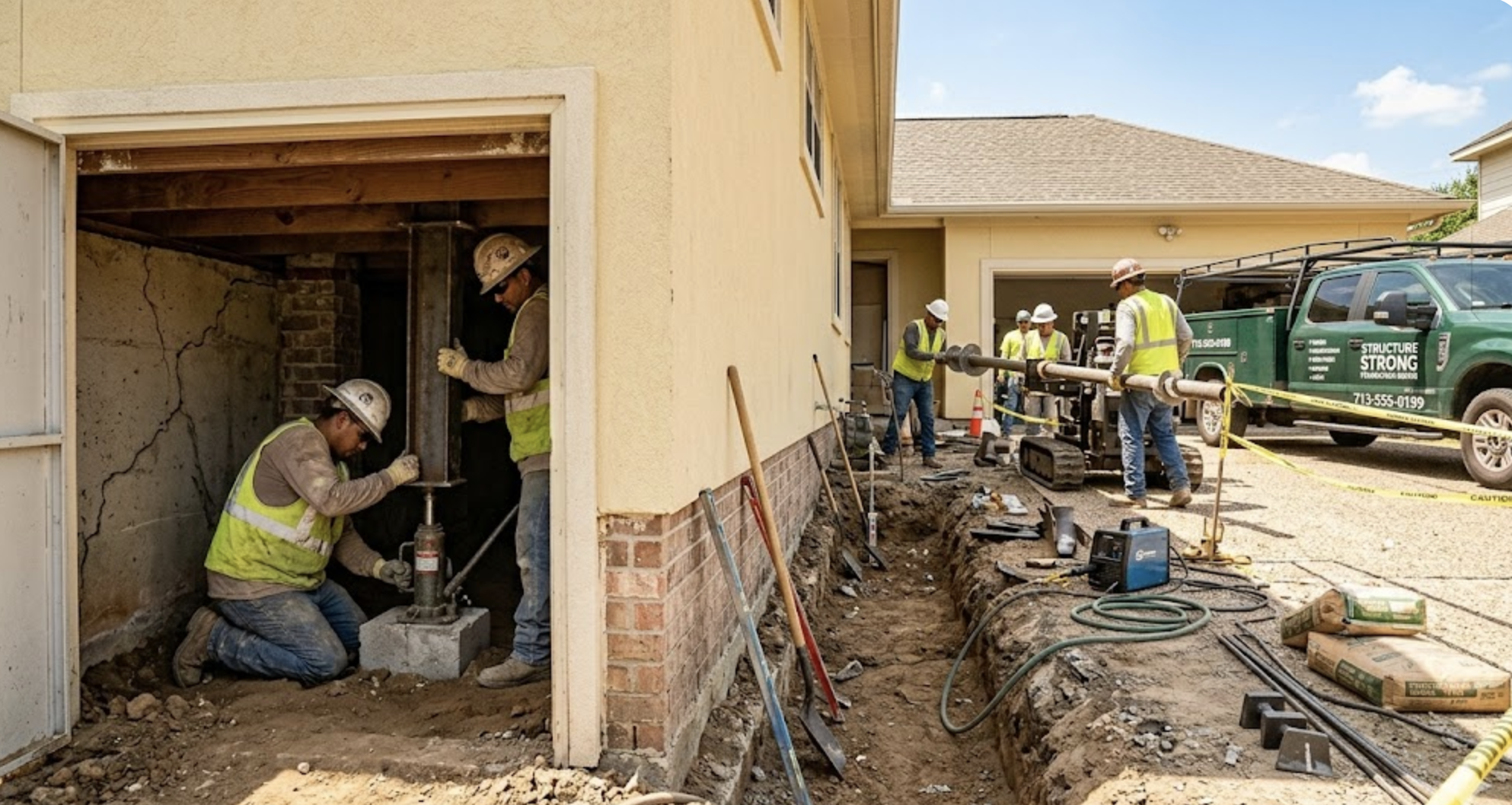
Ask any Houston homeowner what their biggest fear is about their property, and foundation issues will rank near the top. Houston's expansive clay soils — the same geology that makes the region agriculturally rich — contract and expand dramatically with changes in moisture content. Over time, this movement can cause significant foundation shifting that ranges from purely cosmetic to structurally concerning. For rental property owners specifically, foundation issues create a unique set of challenges: tenant notification obligations, rent reduction risk, habitability questions, and the difficulty of managing major repairs across an occupied tenancy. Here's what Houston landlords need to understand.
Key Takeaways
- ✓Houston's Beaumont Clay soil causes foundation movement in most residential properties over time
- ✓Diagonal cracks at door/window corners and sticking doors are the most common early indicators
- ✓Independent structural engineer evaluations ($300–$600) are more objective than repair company assessments
- ✓Pier installation costs range from $3,000 to $15,000+ depending on severity
- ✓Proper drainage is the most cost-effective foundation protection — gutters, grading, and downspout discharge
- ✓Foundation history must be disclosed when selling and should be disclosed to tenants at lease signing
Why Houston's Soil Is Unusually Problematic
Houston sits atop a thick layer of Beaumont Clay — an expansive soil that absorbs water and swells significantly when wet, then contracts and shrinks during dry periods. The Houston area receives highly variable annual rainfall (anything from 30 to 70 inches depending on year and storm events), which means the moisture content of the soil beneath foundations changes constantly.
Slab foundations, which are by far the most common foundation type in Houston's residential market, are particularly vulnerable to this movement because they have no crawl space to accommodate differential settlement. When one part of the slab settles more than another — often the perimeter, where vegetation and drainage affect soil moisture differently — the result is cracking in walls, sticking doors and windows, sloping floors, and in serious cases, structural compromise.
Signs of Foundation Movement in a Rental Property
During property inspections, Houston landlords and property managers should watch for several common indicators of foundation movement. Diagonal cracks at the corners of door and window frames (versus straight horizontal or vertical cracks in drywall, which are more likely to be settling or temperature-related) are classic signs of differential movement. Doors and windows that stick, particularly those that worked fine previously, often indicate soil movement has shifted the frame out of square.
Floor slopes are another significant indicator. A simple way to check is placing a marble or level on the floor — movement greater than about one inch per 10 feet over a broad area is generally worth having evaluated. Exterior brick cracks, particularly in a stair-step pattern following mortar joints, are also a common presentation in Houston.
Immediate Obligations When Foundation Issues Are Discovered
If foundation issues are discovered at a property under tenancy, the first question is whether they affect habitability. Minor cracking and slight door sticking are generally cosmetic and do not affect habitability. Major cracks, significant floor slopes, structural wall damage, or anything affecting load-bearing elements needs professional evaluation immediately.
Texas Property Code requires landlords to maintain rental properties in a habitable condition. Significant foundation issues can implicate this obligation. If a structural engineer determines that a foundation issue creates a habitability concern, the landlord must address it within the reasonable timeframe the law requires — and should communicate with the tenant proactively about the situation and timeline.
Getting a Foundation Evaluation: What to Expect
Foundation evaluations in Houston are conducted by licensed structural engineers or by foundation repair companies (note: foundation repair companies have a financial interest in finding problems, so for an objective assessment, an independent structural engineer is preferable). Structural engineer inspections typically cost $300 to $600 and result in a written report.
The report will classify the severity of movement, identify likely causes, and recommend either monitoring (for minor movement), drainage improvements (which address the cause before the symptom), or pier installation. Pier installation — the most common repair method — involves driving steel piers into stable soil below the expansive clay layer to arrest movement. Costs range from $3,000 to $15,000+ depending on the number of piers required and accessibility.
Drainage: The Prevention That Beats the Cure
Most Houston foundation movement is driven or exacerbated by drainage problems. Poor drainage causes uneven moisture distribution in the soil beneath the foundation — wet on one side, dry on the other, which creates differential movement. Effective drainage around a rental property is one of the most cost-effective preventive investments a Houston landlord can make.
Specific measures: ensure gutters and downspouts are functional and discharge water at least four feet from the foundation. Confirm positive drainage grade around the structure — grade should slope away from the foundation at minimum 5% for the first 10 feet. Address low spots in the yard that allow water to pool. Consider French drains in areas with chronic drainage problems.
Disclosure Obligations for Houston Sellers and Landlords
For landlords who intend to sell properties with known foundation history, Texas disclosure law requires disclosure of known material defects. Foundation repair, even when successfully completed, is a material fact that must be disclosed. Keeping documentation of all foundation work — engineer reports, repair invoices, warranties — protects you both as a landlord and as a future seller.
For active tenants, disclosing known foundation issues at lease signing is a strong practice even where not legally required. Tenants who discover undisclosed issues mid-lease can claim they were deceived, which creates more legal and relationship risk than upfront transparency.
We document foundation condition during our initial property assessment and track any changes through periodic inspections — giving owners both an accurate picture of their asset and a defensible paper trail.