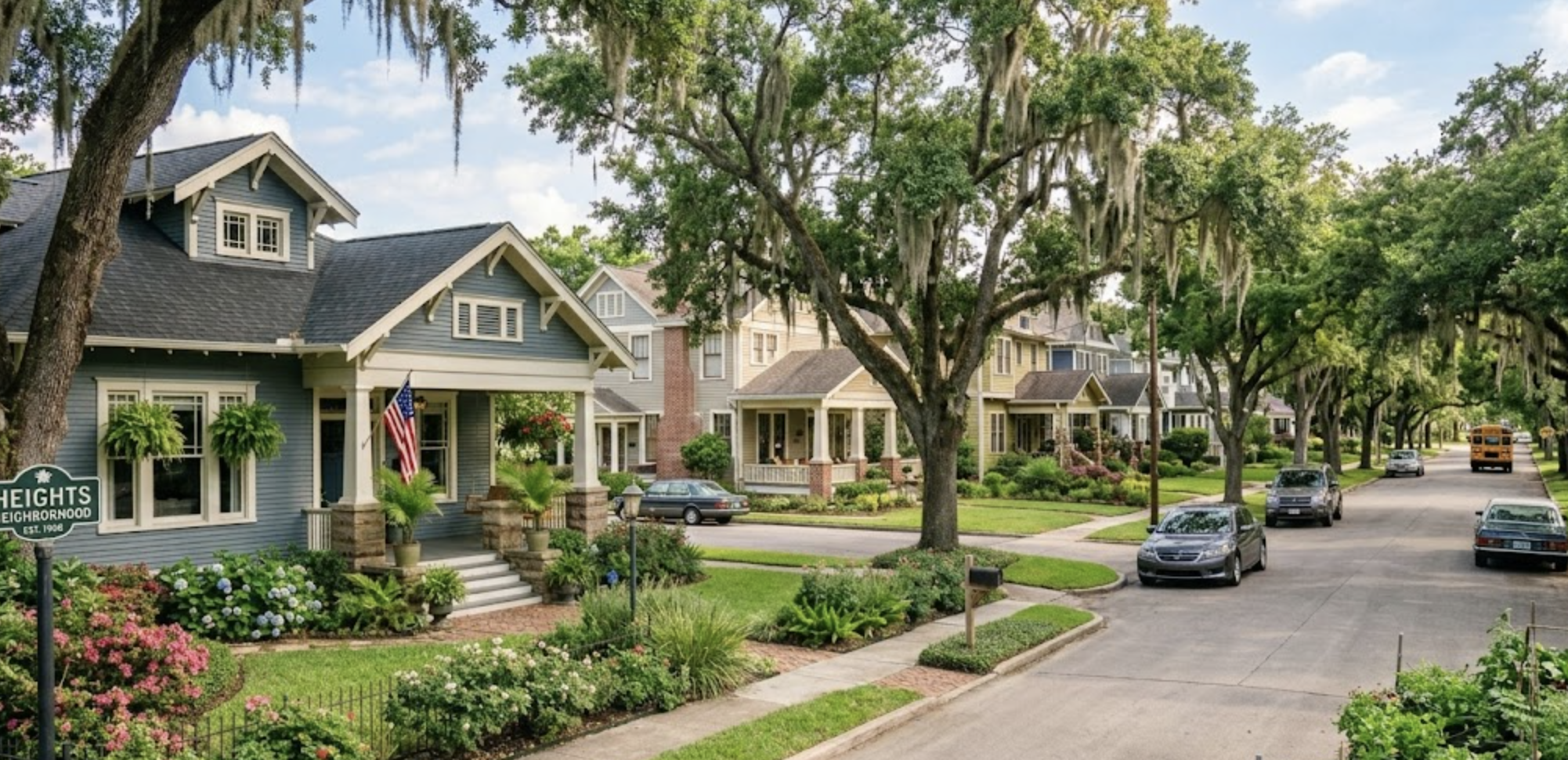
Houston's real estate market is unusually diverse — not just in price, but in character. A rental property in the Heights attracts a completely different tenant profile than one in Katy, and both operate under different economic dynamics than a property near the Medical Center. If you're evaluating where to invest in Houston rental real estate, understanding these distinctions matters as much as the numbers. What follows is an honest look at several of Houston's strongest rental submarkets in 2025 — the factors that make each compelling, and the real considerations investors should weigh before committing.
Key Takeaways
- ✓The Heights offers low vacancy and strong appreciation but thin cap rates (4%–5%)
- ✓Montrose has 70% renter population — updated properties command $400–$600/mo premiums
- ✓Katy ISD drives unusually stable 3–5 year tenant tenure for family rentals
- ✓Medical Center proximity creates recession-resistant rental demand from 100,000+ employees
- ✓Sugar Land offers lower-volatility returns with sub-5% vacancy rates
- ✓Flood zone designation, foundation condition, and employment corridor proximity matter across all Houston submarkets
The Heights and Timbergrove
The Heights remains one of Houston's most consistently strong rental neighborhoods, particularly for single-family homes and newer townhomes. The area attracts young professionals, dual-income couples, and families drawn to walkability, independent restaurants, and proximity to downtown. Rental rates for a 2-bedroom townhome in the Heights typically range from $2,200 to $3,200 per month depending on age and finishes.
The investor consideration here is price. Heights properties trade at a premium, and cap rates on new construction townhomes are thin — often in the 4% to 5% range. Where the neighborhood tends to reward investors is in long-term appreciation and very low vacancy. Good tenants compete for Heights properties, which keeps turnover low and gives landlords leverage in the screening process.
Montrose
Montrose is Houston's most eclectic rental market, and one of its most resilient. The neighborhood's mix of arts, nightlife, and dense walkability draws a renter-heavy population — roughly 70% of Montrose residents rent, compared to the citywide average of around 55%. Single-family bungalows, duplexes, and small apartment complexes all perform well here.
Investors looking at Montrose should pay attention to older construction and its maintenance implications. Many of the most charming homes are pre-1960s, which means deferred maintenance can compound quickly if not managed proactively. Properties that have been properly updated command significantly higher rents than unimproved comparables — often $400 to $600/month more on a similar footprint.
Midtown and EaDo
These two neighborhoods represent Houston's most urban rental environments and have seen significant development activity over the past decade. East Downtown (EaDo) in particular has undergone a transformation, with new restaurants, breweries, and MLS soccer creating a walkable entertainment district that appeals to younger renters.
New construction inventory in EaDo and Midtown means investors competing on quality of finishes more than location. Tenants here are sophisticated and have options, so properties need to be move-in ready and competitively priced. Average rents for a 2-bedroom unit in Midtown run $1,700 to $2,500, with EaDo slightly below that range given its earlier stage of development.
Katy (West Houston)
Katy is arguably Houston's strongest family rental market. The Katy Independent School District consistently ranks among Texas's best, which drives enormous demand from families with school-age children who want access to top schools without buying at current prices. This demographic characteristic creates unusually stable, long-tenure tenants — it's not uncommon for families to lease a Katy property for 3 to 5 years.
Rental rates in Katy range considerably by location and home size, but a 3-bedroom, 2-bathroom home in a good Katy ISD zone typically rents for $1,800 to $2,500/month. Purchase prices have risen significantly since 2020, but Katy's fundamentals — job access via I-10, excellent infrastructure, and demand from energy sector employees — remain strong.
The Medical Center Area and Braeswood
Houston's Texas Medical Center is the largest medical complex in the world, employing over 100,000 people and attracting a constant stream of residents, fellows, and medical professionals seeking housing. This creates a remarkably stable rental demand base that is relatively insulated from broader economic cycles.
Properties within reasonable commuting distance of the Medical Center — roughly the Braeswood, Meyerland, and West University corridors — attract medical residents who often sign 12-month leases, respect properties well, and provide the predictable income that income-focused investors value. The challenge is flood risk in lower-lying parts of this area, which has been highlighted by both Harvey and subsequent rain events. Elevation certificates and flood history should be part of any due diligence.
Sugar Land
Sugar Land offers a well-developed suburban rental market with strong schools, low crime, and consistent demand from professionals in the energy corridor. The community's planned development character means lower maintenance surprises than inner-loop properties, and its tenant base skews toward established families and corporate relocations.
Sugar Land's rental market is not as dynamic as inner-loop neighborhoods but offers investors a defensible, lower-volatility profile. Vacancy in well-priced, maintained Sugar Land homes is typically below 5% annually.
What to Watch For Across All Houston Submarkets
Regardless of which neighborhood you're evaluating, three factors deserve particular attention in Houston specifically: flood zone designation and actual flood history (FEMA maps are a starting point, not the full picture), foundation condition and soil type (Houston's expansive clay soils cause foundation movement that can range from cosmetic to catastrophic), and proximity to major employment corridors, since Houston's sprawl means commute time weighs heavily on rental demand.
We work across Houston's major rental submarkets and can help owners with both market intelligence and operational execution. The right neighborhood depends on your investment goals — and we're happy to talk through the specifics of what you're trying to build.


