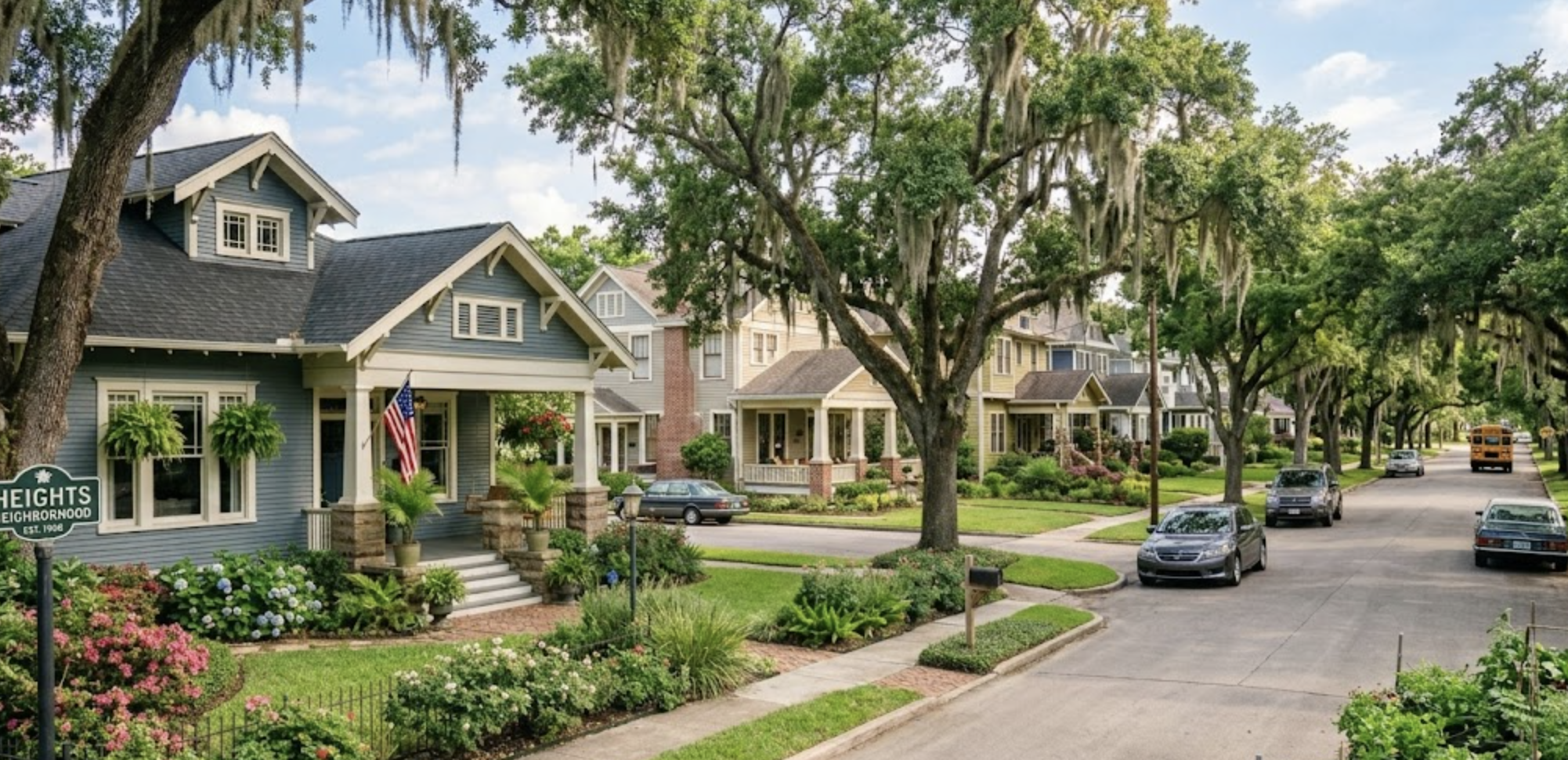
Sugar Land is a market of micro-neighborhoods. From the lakeside communities of Riverstone to the golf-course setting of Greatwood and the established residential fabric of First Colony, each pocket of the city has its own pricing dynamics, tenant profile, and competitive environment. For an investor managing remotely or building a portfolio outside of their home market, that granularity matters — and it's easy to get wrong. This guide covers the specific knowledge required to manage Sugar Land investment properties effectively: the Fort Bend County legal environment, the role of FBISD school zones in pricing, the competitive dynamics of older vs. newer builds, and the upgrade investments that close the gap.
Key Takeaways
- ✓Sugar Land has distinct micro-neighborhoods with different pricing, tenants, and HOA structures
- ✓Fort Bend County legal processes differ significantly from Harris County
- ✓Fort Bend evictions can be resolved weeks faster with local JP court experience
- ✓Clements HS school zone commands a 29% rent premium ($600/mo) over Travis HS
- ✓Strategic upgrades like smart locks ($500) can pay back in under 10 months
- ✓LVP flooring ($4,500) is the single highest-priority upgrade for mid-vintage homes
1. Sugar Land's Micro-Neighborhoods: One Market, Many Price Points
The most common mistake investors make in Sugar Land is treating it as a single market. Pricing a First Colony home against a Riverstone comp — or vice versa — produces a number that is wrong in both directions. Each neighborhood has a distinct identity, a distinct tenant profile, and a distinct premium or discount structure.
First Colony, developed from the 1970s through the 1990s, offers mature trees, established amenities, and larger lots at mid-range price points. Greatwood centers around golf course access and commands a premium from tenant households that value that lifestyle specifically. Riverstone, the newest large-scale development, attracts renters who want modern construction and current design standards.
Each neighborhood also has a different HOA structure and fee level. A Greatwood property with $150/month HOA fees requires different financial modeling than a First Colony home with minimal HOA obligations. Pricing without accounting for this erodes your net return.
Sugar Land's Micro-Neighborhoods
One market, many distinct price points and tenant profiles
Mature trees, larger lots, mid-range pricing
Golf course access, lifestyle premium
Modern construction, current design standards
Established suburban, family-oriented
Mature neighborhood, country club proximity
2. The Fort Bend County Legal Distinction
The most consequential difference between owning rental property in Sugar Land versus Houston is the county jurisdiction. Sugar Land sits in Fort Bend County, not Harris County. These are separate legal systems with different Justice of the Peace courts, different constable offices, different appraisal review processes, and different procedural norms.
Fort Bend County's Justice of the Peace courts operate with smaller dockets than Harris County's high-volume system. A manager who has established relationships with Fort Bend constables and understands local JP procedural preferences can typically regain possession of a property several weeks faster than a generalist working from a Harris County playbook. In a market where the average 3-bedroom SFH rents for $2,200/month, three weeks of additional vacancy costs $1,650 in lost rent.
Fort Bend County has experienced some of the most aggressive appraisal increases in Texas over the past several years — in some years, 10–15% or more on residential properties. A manager with local comp data and ARB hearing experience can consistently secure $20,000–$60,000 in assessed value reductions, saving owners $500–$1,500 annually in property taxes.
Harris County vs. Fort Bend County
Key jurisdictional differences that affect your investment
| Category | Harris County | Fort Bend County |
|---|---|---|
| JP Court jurisdiction | Harris County Pcts. 1–8 | Fort Bend County Pcts. 1–4 |
| Eviction timeline (typical) | 30–50 days | 22–35 days with local rep |
| Property tax protest body | Harris CAD | Fort Bend CAD — smaller, more responsive |
| Constable service | Large offices; high workload | Smaller offices; locally known |
| Appraisal increase trend | 3–5% typical | Up to 10–15% recent years |
| Local attorney pool | Extensive landlord bar | Growing but smaller — specialists valuable |
3. FBISD School Zones and the Rent Premium
In Sugar Land, many tenant households choose a school zone before they choose a house. The Fort Bend Independent School District is nationally recognized — it consistently ranks among the top large districts in Texas and draws families relocating from across the country specifically for the school quality. Within FBISD, school assignment at the high school level creates meaningfully different rent pricing for comparable homes.
A 3-bedroom single-family home zoned to Clements High School commands roughly $600/month more in rent than a comparable home zoned to Travis High School — a 29% premium that compounds to $7,200 in additional annual gross rent. Austin High and Elkins High occupy mid-tier positions in this spectrum.
The school zone premium also changes the tenant profile. Families planning around FBISD school enrollment are typically dual-income households with stable employment and an active reason not to move mid-lease. Average tenancy in the Clements zone runs 2.5–3.5 years. A manager who knows FBISD zoning at the street level — not just by neighborhood name — prices more accurately and attracts the right applicant pool.
FBISD School Zone Rent Premiums
Comparable 3BR homes — price varies by high school zone
Key insight: A Clements-zoned home commands a 29% rent premium. Families planning around FBISD enrollment are dual-income, stable, and average 2.5–3.5 year tenancies.
4. Competing With New Construction: The Strategic Upgrade Framework
Sugar Land's ongoing development, particularly in Riverstone, continuously introduces new construction into a market where a significant share of rental inventory was built in the 1980s and 1990s. A 1995 First Colony home competing with a 2022 Riverstone build is at a real disadvantage on kitchen finishes, flooring, and smart-home features — unless the owner has made targeted improvements.
The highest-return improvements are not necessarily the most expensive. A smart lock and thermostat ($500 investment) yields roughly +$50/month in justified rent increase with approximately a 10-month payback. Interior paint and LED lighting ($1,800) delivers +$80/month with roughly a 22-month payback. Kitchen backsplash ($800) adds +$40/month. LVP flooring replacing carpet ($4,500) delivers +$125/month with a 36-month payback — and eliminates the carpet replacement cycle entirely.
The goal is not to replicate a new-construction property — that's neither feasible nor necessary. The goal is to eliminate the most visible gaps between your property and the new builds it competes with, at the lowest total cost.
Strategic Upgrade ROI
Ranked by payback period — close the gap with new construction
The Bottom Line
Sugar Land rewards local knowledge at every level — from school zone pricing to Fort Bend CAD protest timing to knowing which Riverstone amenity package is drawing tenants away from your First Colony home.
A manager without deep roots in this submarket will leave money on the table at almost every decision point. A specialist closes those gaps and converts the market's genuine strengths into predictable owner returns.
Denova Living has deep roots in the Sugar Land market — from First Colony to Riverstone. We understand Fort Bend County's legal environment, FBISD school zone pricing, and the competitive dynamics of each micro-neighborhood. Contact us for a free Sugar Land property analysis.